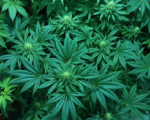
Dr. Matthew Indest, one of America’s top cannabis scientists, just put the entire industry on notice: he is dead serious about establishing humankind’s first marijuana and hemp farms on the Moon and Mars.
The former national director of cultivation and genetics at Curaleaf, who built strains like Titan Express, told reporters this week that space agriculture is no longer science fiction. It is the next logical frontier for cannabis breeding and production.
Indest earned his Ph.D. in Plant, Environmental, and Soil Sciences at Louisiana State University and quickly became one of the most respected minds in commercial cannabis. While running genetics programs for Curaleaf, the largest multistate operator in the U.S., his team released powerhouse cultivars that still dominate dispensary shelves nationwide.
Today he operates at the cutting edge through Refined Genetics and Catalyst BC, developing true F1 hybrid seeds that promise uniformity, vigor, and disease resistance far beyond traditional clones. These are the same breeding principles used in modern tomatoes, corn, and cucumbers. Indest believes they are exactly what humanity will need off-planet.
Why Cannabis Makes Perfect Sense in Space
Space agencies already know plants will be essential for long-duration missions. NASA, ESA, and private companies like SpaceX plan to grow food in lunar habitats and on Mars. Cannabis checks every critical box better than almost any other crop.
It grows fast. Most strains finish in 8-10 weeks.
It thrives under LED lights. Perfect for closed environments.
Every part is useful. Fiber for textiles, grain for food, oils for medicine and nutrition.
It filters air. Cannabis plants absorb CO2 and release oxygen at high rates.
It helps mental health. Crucial for crews facing years of isolation.
Indest points out that hemp fiber could be used to make ropes, clothing, and even building materials on the Moon, while cannabinoid-rich varieties could treat pain, anxiety, and radiation exposure without the need to carry heavy pharmaceutical stocks from Earth.
The Real Challenges Are Soil and Gravity
The biggest hurdle is not light or water. It is regolith, the sharp, toxic powder that covers the Moon and Mars. Lunar soil contains no organic matter and is full of iron oxides and glass shards that shred roots.
Indest is already running trials in simulated Martian and lunar soils here on Earth. Early results show that certain hemp genetics tolerate the harsh conditions surprisingly well when paired with mycorrhizal fungi and biochar amendments. His team has achieved germination rates above 85% in pure Mars analog soil.
“We’re not trying to grow kind bud on day one,” Indest said with a laugh. “First we prove we can grow tough industrial hemp that makes fiber, fuel, and food. Once the habitat is stable, then we bring in the good stuff.”
Seeds, Not Clones, Will Colonize Space
Clones die without perfect conditions. Seeds survive. That is why Indest is obsessed with stable F1 hybrids. A single gram of seed can contain thousands of plants, and those seeds can stay viable for years in cold storage.
Modern hybrid hemp seeds already yield 2-3 tons of fiber per acre on Earth with almost no pesticides. Indest believes the same lines, selected for closed-environment performance, could become the workhorse crop of early lunar and Martian settlements.
He has begun cold-storing elite lines at minus 80 degrees Celsius, exactly the way gene banks preserve wheat and rice for doomsday scenarios. Only this time the doomsday vault is being built for space.
Industry Giants Are Already Listening
While NASA has not officially reached out, several aerospace contractors and private space companies have quietly started conversations with Indest and his partners. One well-known billionaire who plans to go to Mars has reportedly expressed strong interest in bringing cannabis breeding expertise on board.
Indest refuses to name names yet but says the interest is real and growing fast.
“Ten years ago people laughed when I said cannabis would be a billion-dollar legal industry. Five years ago they laughed when I said we’d have true F1 hybrids. Nobody is laughing now.”
He expects the first cannabis seeds to ride on a lunar lander within the next decade, with Martian trials following by the 2040s.
For a plant that spent decades underground, the ultimate high might literally be growing it under alien skies.

Maria Garcia is an award-winning author who excels in creating engaging cannabis-centric articles that captivate audiences. Her versatile writing style allows her to cover a wide range of topics within the cannabis space, from advocacy and social justice to product reviews and lifestyle features. Maria’s dedication to promoting education and awareness about cannabis shines through in her thoughtfully curated content that resonates with both seasoned enthusiasts and newcomers alike.