Indoor growers are losing buds to a problem most never see coming. Even when nutrient tanks read perfect and Cal-Mag bottles are half empty, young leaves still twist, tips still burn, and floral clusters still rot from the inside out. The culprit is not shortage in the reservoir. It is shortage in the leaves, caused by the way calcium actually moves inside the plant.
Calcium travels almost entirely through the transpiration stream, the same pathway water uses to exit the leaves. When humidity climbs or airflow stalls, that stream slows to a trickle. New growth starves for calcium even though roots sit in a calcium-rich solution. This physiological bottleneck has become the silent yield killer in modern sealed rooms and tent grows.
Why Cannabis Demands More Calcium Than Most Crops
Cannabis builds biomass faster than almost any other commercial plant under lights. In a six-week vegetative blast under LEDs, a single plant can quadruple its leaf area. Every new cell wall needs calcium pectinate as mortar. Every expanding bud site needs calcium to hold membranes together during rapid cell division.
Because calcium is phloem-immobile, the plant cannot pull it back from older leaves the way it recycles nitrogen or magnesium. Once a leaf matures, its calcium is locked in place forever. Growing tips and flowers have exactly one chance to get enough: the moment the xylem delivers it. Miss that window and the damage is permanent.
University trials in Colorado and British Columbia now show that peak daily calcium uptake in flowering cannabis can hit 80-100 mg per plant per day under aggressive lighting, roughly double the requirement of tomatoes grown at similar intensity.
The Humidity Paradox in Sealed Environments
Modern growers chase low vapor-pressure deficit (VPD) numbers to maximize CO₂ uptake and reduce water waste. They seal rooms, run dehumidifiers hard, and keep relative humidity at 60-75% during late bloom. That strategy works beautifully for photosynthesis until it collides with calcium transport physics.
At 70% RH and 78 °F, transpiration can drop by half compared to 45% RH at the same temperature. The math is brutal. Less transpiration equals less calcium pulled to the shoot tips exactly when buds are bulking fastest.
Field reports from commercial facilities in California and Oklahoma during the humid summer of 2023 showed entire rooms of top-tier genetics suddenly displaying marginal necrosis and bud rot two weeks into flower, despite EC values sitting at 2.2 and calcium levels at 200 ppm in the feed.
Telltale Symptoms No Grower Can Afford to Miss
The damage almost always appears first in the fastest-growing tissues:
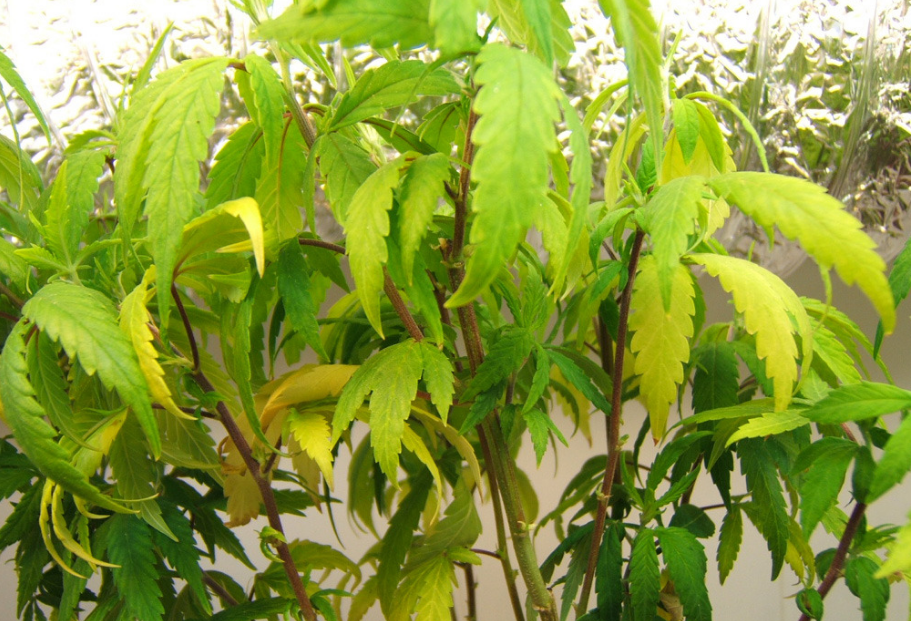
- Sugar leaves on developing buds show rusty brown tips and edges
- New growth twists or cups severely
- Young fan leaves develop interveinal chlorosis that quickly turns necrotic
- Calyx walls weaken, leading to gray mold invasion from minor cracks
One commercial grower in Humboldt lost 18% of his final weight in a single October run after ignoring early tip burn. Lab tests later confirmed tissue calcium levels below 0.4% in affected colas while older fan leaves tested at 1.8%.
Proven Fixes That Actually Work
The solution is not simply dumping more Cal-Mag into the tank. Smart growers now attack the problem from three directions.
First, maintain stronger airflow directly across the canopy. Oscillating fans and proper ducting can increase transpiration by 25-40% without dropping humidity to stressful levels.
Second, run slightly lower night humidity (40-50%) whenever possible. The plant transpires most heavily during the light period anyway, so pulling RH down at night costs little growth while reopening the calcium pipeline for the next day.
Third, supplement with targeted foliar sprays of calcium chelate or calcium acetate during weeks 2-5 of flower. Two evening applications per week at 200-300 ppm can bypass the transpiration bottleneck entirely and raise tissue levels within 48 hours.
Commercial operations that adopted these protocols in 2024 report near-total elimination of calcium-related bud rot, even during humid coastal winters.
The indoor cannabis revolution gave growers perfect control over light, nutrients, and CO₂. It also created environmental conditions that nature never intended, conditions that quietly break calcium delivery. Recognizing this physiological reality is no longer optional. It is the difference between average crops and record-breaking ones.

Maria Garcia is an award-winning author who excels in creating engaging cannabis-centric articles that captivate audiences. Her versatile writing style allows her to cover a wide range of topics within the cannabis space, from advocacy and social justice to product reviews and lifestyle features. Maria’s dedication to promoting education and awareness about cannabis shines through in her thoughtfully curated content that resonates with both seasoned enthusiasts and newcomers alike.