
CANNABIS
What Are the Effects of Combining Alcohol and Cannabis? A Canadian Evidence Guide

What are the effects of combining alcohol and cannabis? The evidence-led answer is straightforward: combining them can increase impairment. Health Canada warns that mixing cannabis with alcohol increases impairment and the risk of an accident. A controlled simulated-driving study also found changes in lane weaving and reaction time under the combined condition. [1] [2]
The available evidence identifies a safety risk. It cannot tell any one person what amount is safe, when they are ready to drive, or how long the effects will last. Canadian guidance and the controlled study do not provide a personal clearance time. [1] [2]
What are the effects of combining alcohol and cannabis?
Health Canada states that cannabis can impair judgment and the ability to react. It also warns that mixing cannabis with alcohol increases impairment and the risk of an accident. Whether one substance feels more noticeable than the other does not change the driving-safety concern. [1]
This is not a product comparison or a dosage question. The evidence does not provide a reliable formula that converts drinks, cannabis products, routes of use, or personal factors into a safe decision to drive. [1] [2]
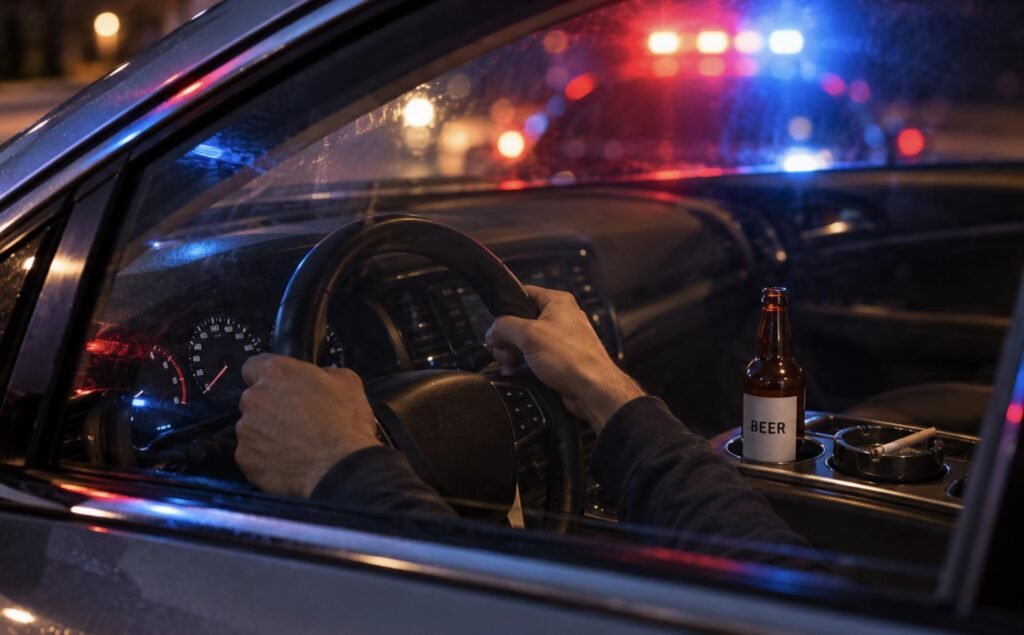
AI-generated image: do not drive after combining alcohol and cannabis.
What are the effects of combining alcohol and cannabis in a controlled driving study?
A randomized, double-blind, placebo-controlled study examined four conditions: placebo, alcohol alone, smoked cannabis alone, and alcohol with smoked cannabis. The participants were cannabis users aged 19 to 29. Researchers assessed simulated driving, subjective effects and a self-reported driving-ability measure. [2]
In the combined condition, participants showed significantly more lane weaving than with placebo. In some single-task and dual-task measures, lane weaving also differed significantly from one or both single-substance conditions. Compared with placebo, both the combined condition and alcohol alone increased reaction time. [2]
The study has important limits. It used a driving simulator, not real-world crash data, and examined smoked cannabis containing 12.5% THC plus alcohol targeted to a breath-alcohol concentration of 0.08% in a defined participant group. Its results cannot predict the effects of a different product, route, amount, setting, or person. [2]
The researchers also reported stronger subjective effects in the combined condition than with either substance alone at some time points, particularly later in the session. That finding adds context, but it cannot predict what any individual will experience. The value of the study is its controlled comparison of defined conditions. [2]
What are the effects of combining alcohol and cannabis on judgement and self-assessment?
In the same trial, results from the driving-ability questionnaire suggested that participants may not have fully recognised their impairment. That does not prove that no one can assess themselves, but it does show why feeling fine is a weak basis for a safety-sensitive decision after alcohol and cannabis have been combined. [2]
The practical question is often immediate: “Can I still drive?” Mood, confidence, or the fading of a noticeable effect are not reliable self-clearance tests. The evidence does not support an invented timeline or a personal rule for deciding when it is safe to drive. [1] [2]
What are the effects of combining alcohol and cannabis if driving is part of the plan?
Health Canada states that cannabis can impair judgment and the ability to react, and can increase the chance of a crash. It also says there is no standard waiting time before driving after cannabis use. Its direction is clear: if you use cannabis, do not drive. [1]
If alcohol and cannabis may be involved, arrange the alternative before the decision becomes urgent. Health Canada suggests staying over, taking a taxi, sharing a ride, using public transit, or choosing a designated driver. Planning early removes the need to decide later whether impairment is present. [1]
What the evidence cannot tell us
The evidence does not provide a safe combined dose, a personal waiting period, or a way to test readiness to drive. It also cannot guarantee safety based on how strongly someone feels an effect. Giving any of those answers would require assumptions that official guidance and the controlled study do not support. [1] [2]
It does not identify a ‘safer’ product combination or a personal formula for driving. The responsible conclusion is simple: treat mixing alcohol and cannabis as a potential impairment issue and arrange an alternative to driving before using either. [1] [2]
Practical questions
Does the combination affect everyone in exactly the same way?
No. The study measured outcomes in a specific group under defined conditions, and Health Canada notes that cannabis effects can vary with amount, frequency of use, and route of use. That variation is one reason the evidence should not be turned into a personal dose or timing rule. [1] [2]
If I do not feel strongly affected, does that mean I can drive?
No. The controlled study found that participants may not have fully recognised their impairment on a driving-ability questionnaire, and Health Canada advises people who use cannabis not to drive. Feeling unaffected is not a validated safety test. [1] [2]
Is there one standard number of hours to wait?
No. Health Canada says there is no standard waiting time before driving after cannabis use. Rather than rely on a personal countdown, arrange an alternative way to travel. [1]
The bottom line
Combining alcohol and cannabis can increase impairment. Canadian public-health guidance and a controlled simulated-driving study both support treating the combination as a safety concern, especially when driving may be involved. The evidence does not offer a safe combined amount or a personal clearance time. Make the transportation decision before use, not after trying to judge your own impairment. [1] [2]
Related resources
References
[1] Health Canada. Cannabis impairment and driving.
[2] Fares A, Wickens CM, Mann RE, et al. Combined effect of alcohol and cannabis on simulated driving. Psychopharmacology (Berl). 2022;239(5):1263-1277. doi:10.1007/s00213-021-05773-3.
Disclosure: This article was prepared in collaboration with Weed Wholesale Canada.

What Are the Effects of Combining Alcohol and Cannabis? A Canadian Evidence Guide

The Same Day GTI Sought DEA Medicine Status, a Class Action Hit

PharmaCann Closed the Olyphant Grow After the IIPR Handover

The OGeez Triple Infused Gummy Trails Peg’s RSO

Kentucky’s First Processor Unlocked Stores and Shut a Pardon

Sam the Skunkman Left Cannabis a Hidden Gene Pool
The Same Day GTI Sought DEA Medicine Status, a Class Action Hit

Ball Family Farms Bets a License on Hoodbaby’s Seed

The 1,500-Pound U-Haul Load Repeats Daley’s Prison Run
Kentucky’s First Processor Unlocked Stores and Shut a Pardon
-
 CANNABIS2 years ago
Sam the Skunkman Left Cannabis a Hidden Gene Pool
-
 LAW6 months ago
The Same Day GTI Sought DEA Medicine Status, a Class Action Hit
-
 CANNABIS1 year ago
Ball Family Farms Bets a License on Hoodbaby’s Seed
-
 MARIJUANA2 years ago
The 1,500-Pound U-Haul Load Repeats Daley’s Prison Run
-
 CANNABIS9 months ago
Kentucky’s First Processor Unlocked Stores and Shut a Pardon
-
 CANNABIS7 months ago
PharmaCann Closed the Olyphant Grow After the IIPR Handover
-

 HEMP11 months ago
Mace Hemp Repeal Stalls While the Ban Clock Moves
-

 MEDICAL2 years ago
Aurora Pastilles Grew in Australia After Demand Turned