
HEMP
Mace Hemp Repeal Stalls While the Ban Clock Moves
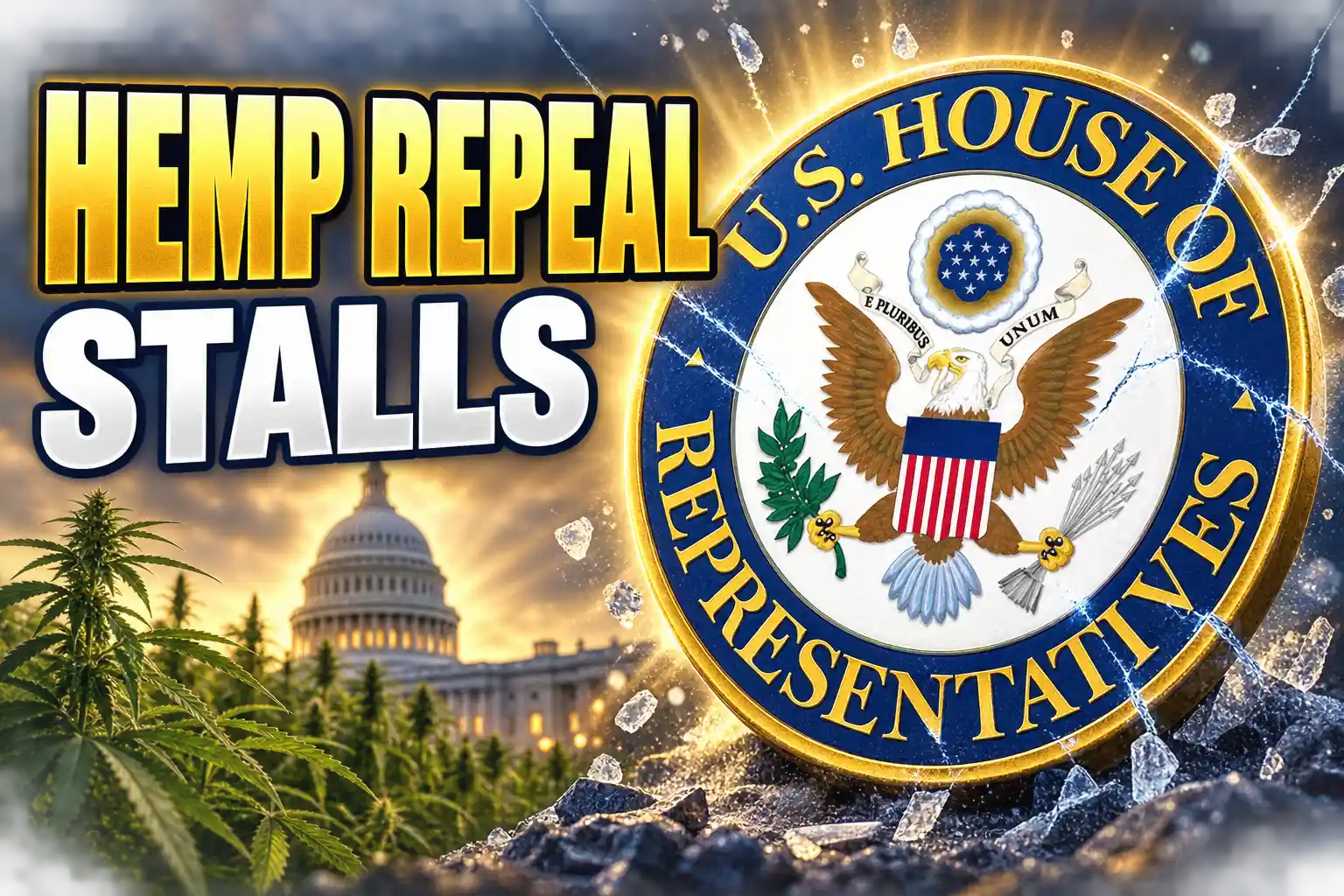
Nancy Mace’s hemp repeal is still in subcommittee. The only relief that became law is a 29-day stay, and synthetics still fall on November 12.

Rep. Nancy Mace’s bill to repeal the federal hemp crackdown has sat in a House subcommittee since January, with no hearing and no added votes. The American Hemp Protection Act still has three cosponsors. The only relief that became law is a 29-day stay, and it expires the same day as federal funding.
Mace, a South Carolina Republican, filed H.R. 6209 eight days after she voted to reopen the government. That spending package rewrote the legal test for hemp. Her repeal would have undone the rewrite. It has not moved.
Mace’s Repeal Never Left the Agriculture Committee
Mace introduced the repeals Section 781 in full bill on November 20, 2025, with Reps. Thomas Massie of Kentucky, Zoe Lofgren of California, and James R. Baird of Indiana. Massie and Baird are Republicans. Lofgren is a Democrat. The House sent it to the Committee on Agriculture the same day.
On January 13, 2026, the committee referred it to the Subcommittee on Commodity Markets, Digital Assets, and Rural Development. Congress.gov still lists the status as Introduced. There is no recorded markup, hearing, or floor vote.
The text is two pages. Section 2 would repeal Section 781 of Public Law 119-37, the agriculture spending law signed on November 12, 2025, and it would do so effective that same November 12 date. In plain terms, it would treat the hemp rewrite as if it had never been attached to the shutdown deal.
That is a clean legislative answer. It is also the one that went nowhere. The fight shifted into later spending bills, where a delay is easier to attach than a repeal.
A Total THC Test and a 0.4 Milligram Cap
The 2018 farm bill, Public Law 115-334, pulled hemp out of the Controlled Substances Act definition of marijuana. Hemp meant Cannabis sativa L. with a delta-9 THC level of not more than 0.3 percent on a dry weight basis. Growers, processors, and stores built a consumer market on that single number.
Section 781 of P.L. 119-37 keeps the 0.3 percent figure and changes what it measures. After the new definition takes effect, hemp is the same plant with a total THC including tetrahydrocannabinolic acid concentration of not more than 0.3 percent. THCA converts to delta-9 THC when heated. A flower that looked legal under a delta-9-only test can fail a total THC test.
HOW THE HEMP TEST CHANGES
| Rule | 2018 farm bill | After Section 781 |
|---|---|---|
| Plant test | 0.3% delta-9 THC, dry weight | 0.3% total THC, including THCA, dry weight |
| Finished products | No per-container milligram cap in the hemp definition | More than 0.4 milligrams of total THC and similar cannabinoids per container is outside hemp |
| Converted cannabinoids | Treated as hemp if the delta-9 limit is met | Cannabinoids made outside the plant are excluded |
| Industrial hemp | Not named as a separate class | Explicitly included (fiber, grain, stalk, seed oil, research) |
| Viable seeds | Covered if the plant meets the delta-9 limit | Excluded if the plant exceeds 0.3% total THC |
The 0.4 milligram cap is the line that hits drinks, gummies, and many full-spectrum CBD packages. It is a per-container limit, not a per-serving limit. A product that is mild by dispensary standards can still miss the hemp definition by a wide margin.
WHAT THE NEW DEFINITION SHUTS OUT
- High-THCA flower: Most floral hemp grown for a hot-box effect will fail a total THC test that counts THCA.
- Converted delta-8: Cannabinoids made outside the plant lose hemp status even if they started as CBD from legal hemp.
- Finished drinks and edibles: Anything over 0.4 milligrams of total THC and similar compounds per container is not hemp.
- Intermediate oils: Mix-in distillates over 0.3 percent combined total THC and similar cannabinoids are excluded.
- Non-natural synthetics: Compounds the cannabis plant cannot make itself are excluded on a separate, earlier clock.
The Congressional Research Service notes that industrial hemp grown for stalk, grain, fiber, seed oil, or research is written into the new definition on purpose. The rider is aimed at cannabinoid products, not at rope and grain. That split is why a fiber farmer and a drink brand can look at the same statute and see different futures.
She Voted for the Shutdown Deal First
Mace’s problem started on the floor. The hemp rewrite rode inside H.R. 5371, the package that ended a 43-day government shutdown and became P.L. 119-37. She supported the Senate amendment to reopen the government. She opposed Section 781 in the same speech.
I strongly oppose Section 781 of this bill, which would deal a fatal blow to American farmers supplying the regulated hemp industry and small businesses, and jeopardize tens of billions of dollars in economic activity.
Rep. Nancy Mace, House floor, November 12, 2025
She put numbers on that market. Under the 2018 framework, she said, hemp supports over 320,000 American jobs, generates $28.4 billion in regulated activity, and produces some $1.5 billion in state tax revenue. She said Section 781 would hit between 90 and 95 percent of hemp products on the market, including most non-intoxicating CBD goods, by banning ingestible products with any quantifiable THC.
She also said she could not vote to keep about 35,000 South Carolina service members working without pay. That is the bind the rider was built for. Members who wanted hemp left alone still had to vote on a must-pass funding bill. Eight days later she filed the repeal. The repeal did not get the same must-pass treatment.
The 29-Day Stay That Became Law
What passed instead is a short stay in another funding bill. On August 8, 2026, the Senate passed H.R. 6500, the Continuing Appropriations and Extensions Act, 2027, by a 90-6 vote. The House agreed to the Senate amendment on September 1 by a 370-48 vote. President Trump signed into law on September 2 as Public Law 119-103.
The White House described the measure as a short-term continuing resolution that funds agencies through December 11, 2026. CRS, in an August 17, 2026 update written before the House vote, already flagged that the Senate CR would delay most of the new hemp definition until that same December 11 date. The hemp clock now matches the funding clock.
THE SEPTEMBER FUNDING VOTES
- Senate passage: H.R. 6500 passed 90-6 on August 8, 2026, with the hemp delay left in.
- House agreement: The House accepted the Senate amendment 370-48 on September 1, 2026.
- New hemp date: Most of Section 781 now takes effect December 11, 2026, 29 days after the original November 12 date.
- What did not pass: H.R. 6209 still has no committee vote.
The stay is not a repeal. Section 781 remains on the books. P.L. 119-103 only limits which parts apply between November 12 and December 11. Unless Congress writes another delay or a new rule into the next funding bill, the total THC test and the 0.4 milligram cap arrive with the next shutdown deadline.
Fiber Farmers and Drink Makers Split on the Ban
Call the market one “hemp industry” and the statute looks like a blanket ban. Read the exclusions and it looks like a sorting machine. Fiber, grain, and stalk stay in. Intoxicating cannabinoid products, and many full-spectrum CBD packages that carry more than 0.4 milligrams of THC per bottle, go out.
That is why some growers who sell stalks for textiles have treated the crackdown as a chance to separate their crop from floral hemp. A Pennsylvania fiber farmer put it in local terms in August: banks already flinch at hemp equipment loans, and a cleaner split between material hemp and ingestible hemp would, in his view, make the fiber side easier to finance. Drink and gummy companies hear the opposite. Their products were legal under a delta-9-only reading of the 2018 law and become marijuana under the new one if they miss the milligram cap.
The converted-cannabinoid fight is older than the rider. Delta-8 THC, often made from CBD, spread through convenience stores after 2018. The Food and Drug Administration’s delta-8 THC consumer update warned that many of those goods were intoxicating, inconsistently labeled, and sometimes packaged like snacks. House appropriators described the 2025 language as closing a hemp loophole. Hemp trade groups asked for age limits, packaging rules, and lab tests instead of a new definition.
Mace said those groups had already coalesced around a 21-and-over sales rule, look-alike packaging bans, and third-party testing. Section 781 did not adopt that model. It changed who counts as hemp. State attorneys general have told Congress they support the new definition and have already aligned state rules with it. That is the other half of the split: some states do not want another federal delay.
When Do the New Hemp Rules Take Effect?
There are now two federal dates, not one. Products that contain cannabinoids the cannabis plant cannot make itself still leave the hemp definition on November 12, 2026. That is the original one-year fuse in P.L. 119-37, left in place by the September stay. Everything else in Section 781, including the total THC plant test and the 0.4 milligram finished-product cap, is set for December 11, 2026.
What Happens to Synthetic Cannabinoids on November 12?
They do not get the extra month. Chemists who work with converted cannabinoids have been blunt about that reading of the stay: HHC, THC-O, and other compounds the plant cannot produce still lose hemp status on November 12. Treating December 11 as a single “hemp ban date” erases that first cut.
THE HEMP CLOCK IN FEDERAL LAW
- December 20, 2018: The 2018 farm bill defines hemp at 0.3 percent delta-9 THC and excludes it from the marijuana definition.
- November 12, 2025: P.L. 119-37 is signed. Section 781 rewrites the hemp definition, with a one-year delay.
- November 20, 2025: Mace files H.R. 6209 to repeal Section 781.
- January 13, 2026: H.R. 6209 is referred to subcommittee. Baird files a two-year delay bill the same day.
- August 2026: FDA still has not published the cannabinoid lists due within 90 days of the November 12, 2025 enactment.
- September 2, 2026: P.L. 119-103 is signed. Most of Section 781 moves to December 11, 2026.
- November 12, 2026: Non-natural synthetic cannabinoids lose hemp status.
- December 11, 2026: The total THC test and the 0.4 milligram cap take effect, and the continuing resolution runs out.
P.L. 119-37 also told FDA to publish, after consulting other agencies, lists of naturally produced cannabinoids, THC-class compounds, other cannabinoids with similar effects, and more detail on what “container” means. CRS wrote in August 2026 that those lists had not been published. Retailers heading into the two fall dates are doing so without that guidance.
Baird’s Two-Year Delay Has 40 Cosponsors and No Vote
Baird, who cosponsored Mace’s repeal, tried a narrower fix. On January 13, 2026, he introduced the Hemp Planting Predictability Act, H.R. 7024, a two-year extension for hemp farmers that would move Section 781’s effective date to November 12, 2028. House Oversight Chair James Comer of Kentucky and Agriculture ranking member Angie Craig of Minnesota joined him. Mace and Massie added their names the next day. Congress.gov lists 40 House cosponsors.
Baird said the November 2025 rider disrupted planting decisions already made under the 2018 rules, and that growers need time to change course. His bill, like Mace’s, remains in the Agriculture Committee. A Senate companion exists. Neither has a recorded vote. Other drafts would raise the THC threshold, hand definitions back to states, or build an FDA product regime. They are paper, not law.
So the live vehicle is the next continuing resolution. December 11 is both the hemp date and the funding date. H.R. 6209 would still wipe Section 781 out. It has had since January to get a hearing. The subcommittee calendar has not given it one. The products that remain on shelves through the fall are living on a spending-bill timer, not on a farm bill.
Disclaimer: This article is news reporting on federal bills and spending laws. It is for information only. It is not legal advice on whether any hemp, CBD, or cannabis product may be grown, made, sold, shipped, or possessed, and it is not advice on how to label or inventory those products. Readers who make or sell hemp goods should consult a licensed attorney who handles controlled-substances and food-and-drug law before they change formulas, labels, or sales. Bill statuses, effective dates, and agency lists reflect the statutes and congressional summaries used here and can change if Congress or FDA acts again.

What Are the Effects of Combining Alcohol and Cannabis? A Canadian Evidence Guide

The Same Day GTI Sought DEA Medicine Status, a Class Action Hit

PharmaCann Closed the Olyphant Grow After the IIPR Handover

The OGeez Triple Infused Gummy Trails Peg’s RSO

Kentucky’s First Processor Unlocked Stores and Shut a Pardon

Sam the Skunkman Left Cannabis a Hidden Gene Pool
The Same Day GTI Sought DEA Medicine Status, a Class Action Hit
Kentucky’s First Processor Unlocked Stores and Shut a Pardon
PharmaCann Closed the Olyphant Grow After the IIPR Handover

Ball Family Farms Bets a License on Hoodbaby’s Seed
-
 CANNABIS2 years ago
Sam the Skunkman Left Cannabis a Hidden Gene Pool
-
 LAW6 months ago
The Same Day GTI Sought DEA Medicine Status, a Class Action Hit
-
 CANNABIS9 months ago
Kentucky’s First Processor Unlocked Stores and Shut a Pardon
-
 CANNABIS7 months ago
PharmaCann Closed the Olyphant Grow After the IIPR Handover
-
 CANNABIS1 year ago
Ball Family Farms Bets a License on Hoodbaby’s Seed
-

 MARIJUANA2 years ago
The 1,500-Pound U-Haul Load Repeats Daley’s Prison Run
-

 CANNABIS12 months ago
Ahern Left the Cannabis Chair, Then the Lottery Collapsed
-

 MEDICAL2 years ago
Aurora Pastilles Grew in Australia After Demand Turned