
HEMP
A 0.4 mg Cap Threatens Kentucky Full-Spectrum CBD Oil
A 0.4 mg per-bottle THC cap aimed at converted hemp intoxicants also knocks most Kentucky full-spectrum CBD oil out of federal hemp.

A 0.4 milligram cap on total THC per bottle, set to take effect December 11, 2026, would push most full-spectrum CBD oil outside the federal hemp definition. Bill Polyniak, founder of Kentucky Cannabis Company and Bluegrass Hemp Oil, says the cap does not ask whether that THC was pulled from a flower or made in a flask.
Congress wrote the milligram line to stop intoxicating hemp drinks, gummies, and chemically converted isomers that rode the 2018 Farm Bill’s 0.3 percent delta-9 test. The same line also measures a 4 oz tincture of plant extract that Kentucky’s original 2014 hemp pilots were built to produce.
A Bottle, Not a Plant, Now Faces the Test
The rewrite sits in Section 781 of Public Law 119-37, the funding package signed November 12, 2025. It amends the hemp definition in the Agricultural Marketing Act, now codified at 7 U.S.C. 1639o. The plant test switches from delta-9 THC only to total tetrahydrocannabinols, including THCA, still capped at 0.3 percent on a dry-weight basis. Finished consumer products get a second test that the 2018 law never used.
Any final hemp-derived cannabinoid product with more than 0.4 milligrams combined total per container of total THC, including THCA, plus other cannabinoids that have similar effects or are marketed that way, is excluded from hemp. The statute defines a container as the innermost wrapping in direct contact with the product for retail sale, a jar, bottle, bag, box, packet, can, carton, or cartridge. Servings inside that vessel are not measured one by one. The whole bottle counts.
Public Law 119-103, signed September 2, 2026, after a 90-6 Senate vote on August 8 and a 370-48 House vote on September 1, moved most of Section 781 from November 12, 2026, to December 11, 2026. One slice stayed on the original date. Products that contain cannabinoids “not capable of being naturally produced by a Cannabis sativa L. plant” still leave the hemp definition on November 12, 2026. Cannabinoids the plant can make, if they were synthesized or manufactured outside the plant, fall with the December 11, 2026, package, as does the 0.4 milligram cap.
THE DATES IN THE HEMP REWRITE
- November 12, 2025: Congress writes the new hemp definition into Section 781 of Public Law 119-37, effective 365 days later.
- November 20, 2025: Rep. Nancy Mace introduces H.R. 6209, the American Hemp Protection Act, to repeal Section 781.
- January 13, 2026: The House refers that repeal to the Subcommittee on Commodity Markets, Digital Assets, and Rural Development.
- September 2, 2026: Public Law 119-103 moves most of Section 781 to December 11, 2026, and leaves non-naturally-producible cannabinoids on November 12, 2026.
- November 12, 2026: Cannabinoids the plant cannot naturally produce lose federal hemp status.
- December 11, 2026: The total-THC plant test and the 0.4 milligram per-container cap take effect unless Congress writes another date.
Intermediate products, the oils and powders meant to be mixed before sale, face a different ceiling: more than 0.3 percent combined total THC and similar-effect cannabinoids, not the 0.4 milligram finished-goods cap. Industrial hemp grown for stalk, fiber, grain, and seed oil stays inside the definition. A drug approved under the federal food and drug statute is not treated as a hemp-derived cannabinoid product.
The 2014 Pilot Letter That Started Genesis Blend
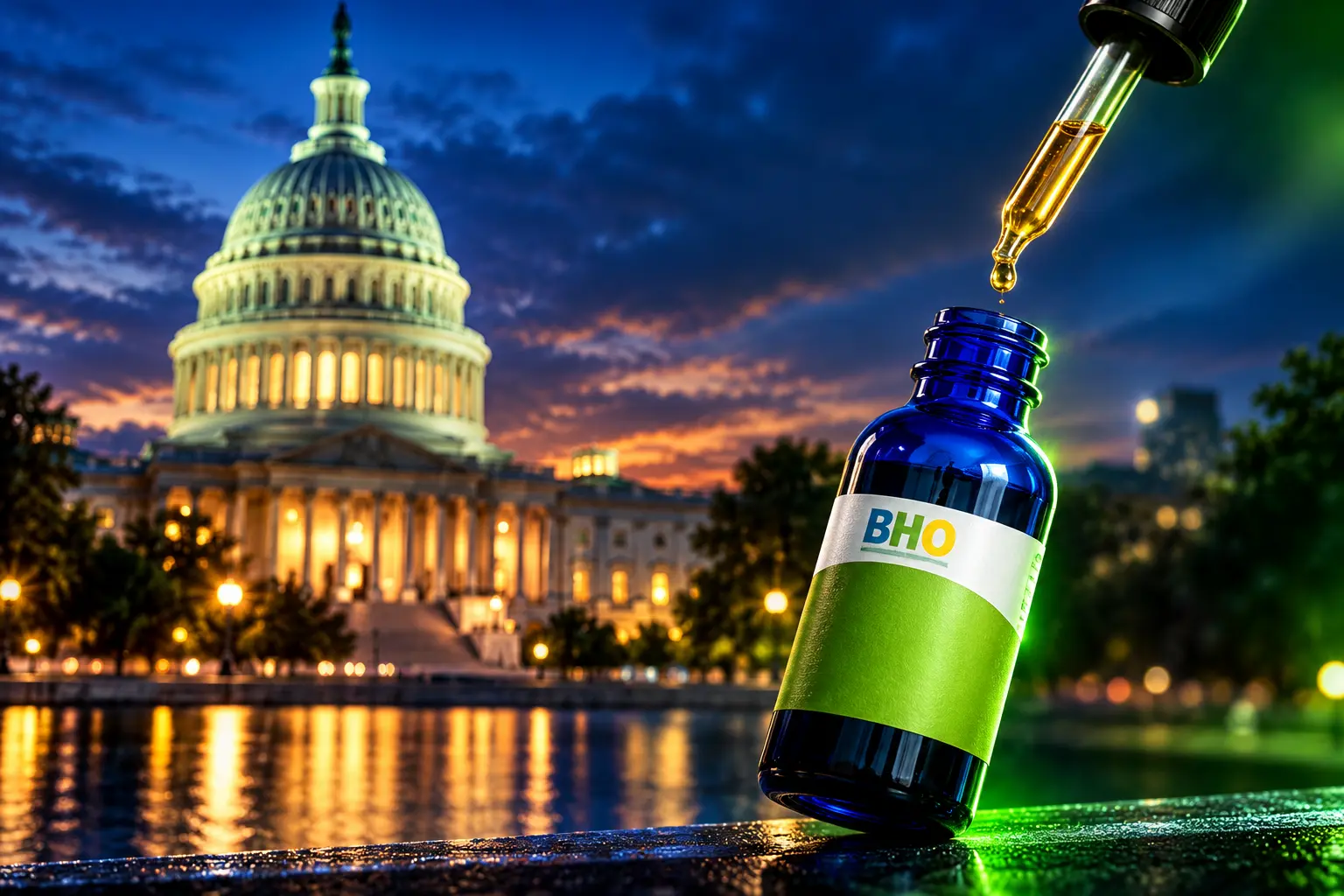
A March 10, 2014, Kentucky Department of Agriculture letter places Polyniak in one of six authorized industrial hemp pilot programs. He has said the work began after his son developed epilepsy and had severe side effects from prescription drugs. The consumer brand that followed, Bluegrass Hemp Oil, sells Genesis Blend Full Spectrum CBD Oil made from Kentucky-grown hemp blooms rather than purified CBD isolate.
The 4 oz Original bottle is 118 mL and lists 1,190 mg of CBD, about 10 mg per 1 mL serving, at $95. A 1 oz bottle lists 300 mg of CBD at $34. The company describes the oil as full-spectrum extract with naturally occurring minor cannabinoids, terpenes, and detectable trace THC, labeled under the old 0.3 percent THC hemp limit. Product pages name the founder’s son, Colten, as a daily user of the oil. Extraction runs at an FDA-registered facility in Midway, where Polyniak later put cultivation, formulation, manufacturing, and lab testing under one roof. Stores sit at Lexington Green and in historic Midway, with orders online.
There’s a difference between extracting what the hemp plant naturally produces and chemically converting isolated CBD into intoxicating delta-8 or delta-9 THC. Those differences matter when we’re talking about consumer safety and the future of hemp.
Bill Polyniak, founder, Kentucky Cannabis Company
He has also flagged a packaging mismatch that never made the milligram debate. Some child-resistant closures are hard for older adults with arthritis to open. Federal and state packaging rules already vary by product type, and he wants those differences kept, rather than one closure standard for every cannabinoid bottle.
Why Converted Cannabinoids Drove the Rewrite
Delta-8 THC occurs in cannabis in very small amounts. Commercial concentrations are commonly made by chemically converting CBD. The FDA’s consumer update on delta-8 says concentrated amounts are typically manufactured from hemp-derived CBD, that the products have not been evaluated or approved for safe use, and that extra chemicals are needed to convert CBD into delta-8 THC. The agency warns that the process can leave harmful by-products and that some production happens in unsanitary settings.
FDA DELTA-8 HARM REPORTS
- Agency cases: The FDA received 104 adverse-event reports between December 1, 2020, and February 28, 2022.
- Who was hurt: 77% involved adults, 8% involved patients under 18, and 15% listed no age; 55% needed emergency evaluation or hospital admission, and 66% followed food products such as brownies or gummies.
- Poison centers: National poison control logged 2,362 delta-8 exposure cases from January 1, 2021, through February 28, 2022; 41% involved patients under 18.
- Unintentional use: 40% of those cases were unintentional, and 82% of the unintentional cases involved children; 70% required a health-care facility, 8% of those reached critical care, and one pediatric case was coded with a medical outcome of death.
A 2023 paper in the Journal of Cannabis Research, “Potency and safety analysis of hemp delta-9 products,” sent 53 popular hemp delta-9 items to InfiniteCAL, an ISO/IEC 17025 accredited lab. Among 49 products assessed for cannabinoid origin, the lab estimated that 24 of 49 products used conversion of CBD to THC through cyclization. That share is a sample, not a census of the whole market. The same set found 96.2% still under the 0.3 percent delta-9 dry-weight limit and 66.0% off their stated dose by more than 10%. Erik Paulson, InfiniteCAL’s lab manager, said a vast majority of hemp-labeled delta-9 is either cannabis-derived or, more often, converted from CBD isolate.
That conversion trade, sold in convenience stores and online without the testing rules that licensed marijuana shops face, is what lawmakers keep citing. Growers who never ran a flask still inherit a bottle cap built for that aisle. The statute’s November 12, 2026, clause reaches cannabinoids the plant cannot make. The December 11, 2026, milligram clause reaches total THC in the finished package, however it got there.
Full-Spectrum Oils Run Over the 0.4 mg Cap
Under the 2018 dry-weight test, a 10 g gummy could hold about 30 mg of delta-9 THC and still be called hemp. A 5 mg hemp seltzer sat in the same legal bucket. The new cap is 0.4 milligrams in the entire retail container, so those formats fail by large multiples. Full-spectrum tinctures fail for a quieter reason: trace THC adds up across a high-CBD bottle even when no one is chasing a high.
ILLUSTRATIVE THC LOADS AGAINST THE 0.4 MG CAP
| Product | Example THC in one container | Times the 0.4 mg cap | Federal hemp status from December 11, 2026 |
|---|---|---|---|
| Hemp delta-9 seltzer | 5 mg | 12.5 times | Not hemp |
| 10-count gummy pack at 5 mg each | 50 mg | 125 times | Not hemp |
| 3.5 g hemp flower at 0.3% total THC | 10.5 mg | 26 times | Not hemp |
| 1,000 mg CBD tincture from 0.3% total-THC distillate | about 3.8 mg | about 9 times | Not hemp unless reformulated |
The tincture row uses a common formula: 1,000 mg of CBD from 80 percent distillate requires 1,250 mg of distillate; at 0.3 percent total THC that load is about 3.8 mg in the bottle. Even some isolate lots testing at 0.05 percent total THC can push a 1,000 mg bottle to 0.5 mg, over the cap. Broad-spectrum oils stripped to non-detect THC are the SKUs most likely to remain hemp. Genesis Blend’s 4 oz bottle carries 1,190 mg of CBD and is sold as full-spectrum with detectable trace THC, so it is judged by the same whole-container arithmetic. The company has not published a milligram-per-bottle THC total against the new cap.
Shrinking the bottle is a compliance lever, because the cap is per container, not per milliliter. A 1 mL vial that holds under 0.4 milligrams could pass on math alone. That is not how a 118 mL family tincture is sold, and stripping the THC to pass the test would end the full-spectrum claim Polyniak built the brand on.
Kentucky Farmers Planted 4,800 Hemp Acres
USDA’s National Agricultural Statistics Service, in the National Hemp Report released April 16, 2026, put 2025 U.S. industrial hemp at 49,267 acres planted in the open, 43,707 acres harvested, and $739 million in production value, up 64 percent from 2024. Kentucky planted 4,800 hemp acres that year. Texas led named states at 6,700 acres. Kentucky remains one of the country’s large hemp plantings more than a decade after those six pilot programs.
The plant itself can still qualify as hemp on December 11, 2026, if total THC including THCA stays at or under 0.3 percent dry weight. A finished oil, gummy, or can made from that plant is a different object under the statute. Floral hemp that is legal in the field can become marijuana in a bottle once the milligrams are added up. Fiber, grain, and seed-oil crops do not run that second test in the same way, because industrial hemp is written into the new definition on purpose.
Polyniak’s Midway shop is a small slice of that acreage, a flower-to-oil line rather than a fiber shed. The 0.4 milligram rule is a consumer-product rule. It lands on the people who spent the last twelve years turning Kentucky blooms into labeled tinctures, not on a stalk grown for hurd.
Isolate and Fiber Stay Inside the Definition
CBD as a molecule is not banned. What changes is which finished packages may travel as hemp in interstate commerce. Products that fall outside the new definition are treated as marijuana under the Controlled Substances Act, which brings a different set of federal criminal, banking, and tax rules than the 2018 hemp channel.
WHAT THE NEW DEFINITION STILL COUNTS AS HEMP
- Industrial hemp: Stalk, fiber, grain, seed oil, and related non-cannabinoid uses stay in the statute, along with certain microgreens and research plants.
- The standing crop: Cannabis sativa L. at or under 0.3 percent total THC including THCA on a dry-weight basis still meets the plant test.
- Low-THC finished goods: A final cannabinoid product at or under 0.4 milligrams of total THC plus similar-effect cannabinoids per innermost container can still be hemp.
- Approved drugs: A product that is the subject of an approved drug application is excluded from the hemp-derived cannabinoid product category.
The exclusions run the other way. Finished packages over 0.4 milligrams of combined total THC and similar-effect cannabinoids drop out on December 11, 2026. Intermediate lots over 0.3 percent combined total, or intermediates sold straight to consumers, drop out on that date as well. Cannabinoids the plant cannot naturally produce drop out on November 12, 2026. Cannabinoids the plant can produce, if they were made outside the plant, are grouped with the December 11, 2026, changes. HHS is directed to publish lists of naturally produced cannabinoids, THC-class compounds, and cannabinoids with similar effects, plus more detail on what counts as a container. Those lists were not in force as finished consumer guidance when the delay was signed.
Payment processors and retailers are already sorting catalogs against that split, because a 4 oz full-spectrum oil and a 5 mg seltzer fail for the same reason even though they were never the same product. Isolate brands that can show non-detect THC have a path that flower-extract brands do not, unless they cut bottle size or cut the cannabinoids that made the extract “full-spectrum.”
Repeal Bills Have Not Left Committee
H.R. 6209, the American Hemp Protection Act, would repeal Section 781 and put the 2018 definition back in place. Mace introduced it November 20, 2025, with Reps. Thomas Massie, Zoe Lofgren, and James Baird. It was referred to a House Agriculture subcommittee on January 13, 2026, and had not advanced. Other bills would regulate instead of erase the change, including a state opt-out from Sens. Rand Paul, Amy Klobuchar, and Joni Ernst, and a licensing-and-tax plan from Reps. Andy Barr and Angie Craig. None of those measures had passed a committee by late October 2026. A repeal that would restore the 2018 definition remains a bill, not a date on the calendar.
December 11, 2026, is also when the September funding law runs out, so the hemp date sits on whatever spending bill Congress passes next. Lawmakers moved the cap once by parking it on a continuing resolution. They can move it again the same way, leave it, or replace it. Polyniak has spent more than twelve years making oil from cannabinoids the plant produces, and he still wants that history read separately from the conversion trade. The test that takes effect December 11, 2026, counts milligrams in the bottle, not the method that put them there.
Disclaimer: This article is news reporting and analysis of federal hemp law and one Kentucky manufacturer’s products. It is informational only and is not medical advice, legal advice, or a recommendation to buy, sell, or use any cannabinoid product. Readers who use CBD or other hemp products, especially anyone treating a seizure disorder or taking prescription drugs, should consult a licensed physician, and businesses facing the December 11, 2026, definition change should consult a qualified attorney. Figures, bill statuses, and effective dates reflect the statutes, agency pages, and company materials cited here and may change if Congress, USDA, FDA, or the company issues a later update.

The Hemp THC Delay Hands Dispensaries the Intoxicating Shelf

Trump’s Medicare CBD Gift Stalls Before the Hemp Ban

Maryland Vets Can Talk CBD Before Federal Hemp Rules Hit

France Banned CBD Edibles While Shop Cannabis Turned Synthetic

A 0.4 mg Cap Threatens Kentucky Full-Spectrum CBD Oil

PharmaCann Closed the Olyphant Grow After the IIPR Handover

Kentucky’s First Processor Unlocked Stores and Shut a Pardon

Numinus Missed Its Filing Date and Lost the TSX

Aurora Pastilles Grew in Australia After Demand Turned

The OGeez Triple Infused Gummy Trails Peg’s RSO
-
 CANNABIS8 months ago
PharmaCann Closed the Olyphant Grow After the IIPR Handover
-
 CANNABIS10 months ago
Kentucky’s First Processor Unlocked Stores and Shut a Pardon
-
 BUSINESS2 years ago
Numinus Missed Its Filing Date and Lost the TSX
-
 MEDICAL2 years ago
Aurora Pastilles Grew in Australia After Demand Turned
-
 NEWS9 months ago
The OGeez Triple Infused Gummy Trails Peg’s RSO
-
 LAW6 months ago
The Same Day GTI Sought DEA Medicine Status, a Class Action Hit
-

 MARIJUANA2 years ago
The 1,500-Pound U-Haul Load Repeats Daley’s Prison Run
-
 CANNABIS2 years ago
Sam the Skunkman Left Cannabis a Hidden Gene Pool