
HEMP
Trump’s Medicare CBD Gift Stalls Before the Hemp Ban
Trump’s Medicare hemp CBD pilot is stuck at six care groups and zero supplier sales, with those products illegal on December 11.

Only six of 74 Medicare care networks are approved to hand seniors hemp CBD, and the products on that list become illegal on December 11. The Center for Medicare and Medicaid Innovation opened the Substance Access Beneficiary Engagement Incentive on April 1, 2026, with a $500 yearly cap. CMS will not pay for the bottles. Each care group buys them from its own budget, and a clinician hands them out.
President Donald Trump and CMS Administrator Mehmet Oz sold that channel as free CBD for millions of Medicare patients. The hospital networks that would have to write the checks have barely moved, and a hemp rewrite already on the books will take most of those products off the legal list this winter.
The White House Sold Free CBD for Millions
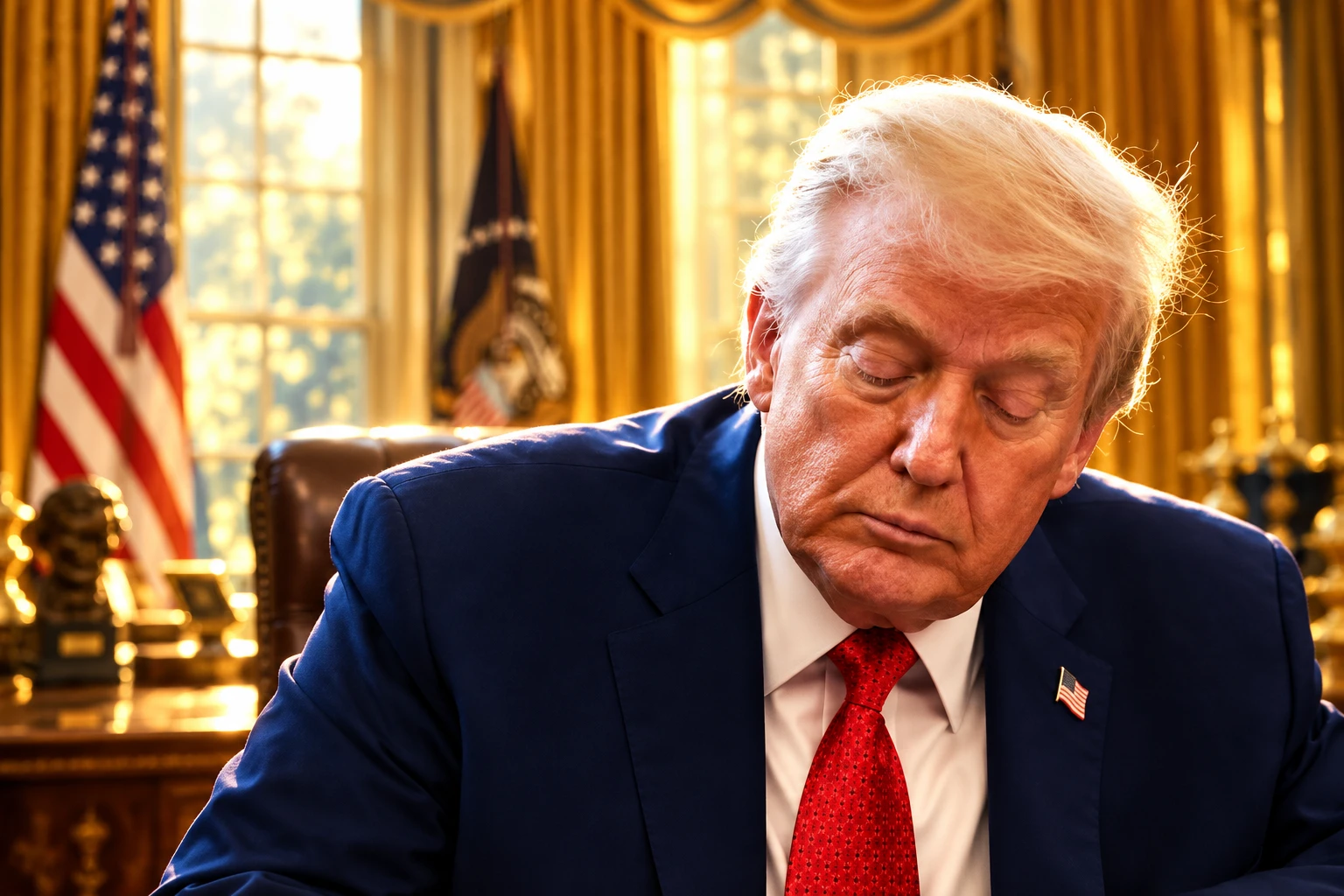
On December 18, 2025, Trump signed Executive Order 14370 in the Oval Office, directing the attorney general to finish moving marijuana to Schedule III and telling his staff to work with Congress on hemp-derived CBD. Oz told the room that CMS would let Medicare patients receive CBD “as early as April of next year, and at no charge if their doctors recommend.” Trump’s own order cited chronic pain in nearly 1 in 4 U.S. adults and more than 1 in 3 seniors, and it said 1 in 5 adults and nearly 15 percent of seniors had used CBD in the past year.
The agency that actually runs the pilot wrote a narrower program. In its April 1, 2026 press release, CMS called the incentive “a provider-led, model-specific tool” that “is not available to all Medicare beneficiaries,” and it said five accountable care organizations in ACO REACH had submitted plans. Innovation Center Director Abe Sutton described it as another tool for symptom consults, with safeguards. Oz’s line that day was about clinical oversight, not a new Medicare benefit.
CMS is blunt on the money. Its program page states that Medicare does not pay the participant for the products, and that patients should not file a Medicare claim. Care groups cannot tell patients to buy retail bottles and turn in receipts. A physician aligned with the group has to furnish the product directly. Headlines still describe a senior benefit you sign up for. There is no enrollment form at CMS.
CMS RULES ON THE BOTTLE
- Who can offer it: Only groups in ACO REACH, the Enhancing Oncology Model, and, starting January 1, 2027, the LEAD model, after CMS approves an implementation plan.
- Who can receive it: Aligned patients 18 or older, not pregnant or breastfeeding, outside the model’s frailty exclusion, with no listed disqualifying conditions, after a physician documents shared decision-making and a drug review.
- What can be handed out: Federally legal hemp products at no more than 0.3% delta-9 THC, with no inhalables, no oral serving over 3 milligrams of tetrahydrocannabinols, no cannabinoids the cannabis plant cannot make, plus third-party tests for potency and contaminants.
- Where it is legal: Only in states where the eligible hemp products are legal, and CMS says it will rewrite its definition if federal hemp limits change, including under Section 781 of the FY2026 Agriculture Appropriations Act.
That last clause is the kill switch. If Congress’s hemp rewrite takes effect, the incentive follows the new law down with it.
Howard Kessler Got the Oval Office to Move
Howard Kessler, a Palm Beach financier and Mar-a-Lago Club member who founded the Commonwealth Project, is the person Trump, HHS Secretary Robert F. Kennedy Jr., and Oz credited in the room. Trump said Kessler had come to him “on more than one occasion” after a brutal stretch of illness and had asked the White House to take a hard look at hemp CBD. Oz called Kessler “a pain in our sides.” On April 1, Kessler’s own statement claimed “millions of older Americans now have access to hemp-derived products through physician-guided care.”
The order that came out of that campaign already flagged the trap. Trump’s text notes that some full-spectrum CBD products will once again be controlled as marijuana under the Controlled Substances Act when Section 781 of Public Law 119-37 takes effect, because they sit above the per-container THC cap in that statute. The White House asked Congress to update the hemp definition so seniors could keep full-spectrum CBD. It did not wait for that rewrite before CMS opened the incentive.
Why Only Six of 74 Care Groups Signed On
ACO REACH has 6 of 74 participating care organizations approved to offer hemp CBD, a CMS spokesperson said, up from the five that had filed plans on April 1. The model serves an estimated 1.7 million people in traditional Medicare across all 50 states, the District of Columbia, and Puerto Rico. CMS would not say how many of the six are actually giving product to patients. Patients in New York and Florida started receiving products in May. No physician practice in the Enhancing Oncology Model, the other 2026 track, applied.
THE PROGRAM ON PAPER
- Yearly cap: $500 per eligible patient, paid by the care group, not by Medicare.
- Approved REACH groups: 6 of 74, with CMS silent on how many have dispensed a bottle.
- Oncology track: Zero applicants in the Enhancing Oncology Model.
- Supplier filings: No program product revenue reported through the summer.
Jim Higdon, co-founder of Louisville, Kentucky-based Cornbread Hemp, signed in March as exclusive hemp supplier to Alliant Purchasing, which the company says serves 68,000 provider locations. He said the care groups are waiting on Congress before they spend money on products that could be illegal in December.
No one’s going to start a program a couple months before it has to wind down.
Jim Higdon, co-founder, Cornbread Hemp
Sasha Kalcheff-Korn, executive director of Realm of Caring, a Colorado Springs nonprofit that supports patients in the program, called the coverage claim the core mix-up: “One of the biggest misconceptions is that Medicare now ‘covers CBD.’ It does not.” She said that to date, no Medicare beneficiaries have been referred to or enrolled in Realm of Caring’s support services because of the incentive.
THE SUPPLIERS WAITING ON CONGRESS
| Company | Role they claimed | What the record shows |
|---|---|---|
| Charlotte’s Web | CBD catalog marketed to care groups | No second-quarter program revenue; August call called the channel an early build-out |
| cbdMD | Supplier | No program product sales in August results; about $200,000 in professional fees grouped with merger and other costs |
| Cornbread Hemp | Exclusive hemp supplier to Alliant Purchasing | Higdon would not say whether orders have arrived; hospital groups are waiting on Congress |
| High Tide (NuLeaf Naturals) | Talks with three of the initial care groups | Omar Yar Khan, chief communications officer, said “Not yet,” with the work still at business development |
| Realm of Caring | Patient support tied to Charlotte’s Web | Zero Medicare patients referred or enrolled through the incentive |
Charlotte’s Web, in its second-quarter release, said it is talking to care groups about value-based pilots and that full-spectrum eligibility remains linked to the federal legislative process. The company said it would not discuss orders ahead of third-quarter results.
The Sleep Gummy That Cannot Survive December
CMS today allows a finished oral product with up to 3 milligrams of tetrahydrocannabinols per serving, as long as delta-9 THC stays at or under 0.3% and the product is federally legal hemp. Charlotte’s Web’s care-group catalog lists a sleep gummy at 2.5 milligrams of THC per serving and another gummy at 1 milligram. Both clear the 3 milligram serving line. Both fail the hemp rewrite.
Section 781, as delayed by Public Law 119-103, makes a finished hemp product illegal on December 11 if it holds more than 0.4 milligrams of total THC per container, counting THCA and other covered isomers, not just delta-9. A single 2.5 milligram serving is more than six times that container cap. A 1 milligram gummy is still two and a half times the cap if it sits in its own bottle.
THE TWO THC RULES
| Rule | Limit | A 2.5 mg sleep gummy |
|---|---|---|
| CMS incentive now | 0.3% delta-9 THC and 3 mg tetrahydrocannabinols per oral serving | Fits the serving cap |
| Federal hemp definition on December 11 | 0.4 mg total THC per container | One serving is more than six times the legal container amount |
Jonathan Miller, general counsel for the U.S. Hemp Roundtable, said the CMS program “simply cannot work if the 0.4 mg/container requirement goes into effect,” because most CBD products on the market hold more than 0.4 milligrams of THC per container. High Tide has been building THC-free broad-spectrum SKUs for more than three years, Khan said, with other hemp compounds left in and the THC taken out. That is a catalog shift for a channel that was sold as full-spectrum CBD for seniors.
Oz Asked the Senate to Save the Pilot
Oz spent August trying to keep the old hemp definition alive long enough for his own incentive to function. In an August 6 letter to senators, he urged them to oppose an amendment from Sen. Ted Budd, a North Carolina Republican, that would have stripped a one-month delay from a stopgap spending bill and let the hemp rewrite hit on November 12.
Passage of this amendment would undo significant gains that have been made to make clinically-appropriate full-spectrum hemp-derived CBD accessible to the senior citizens and individuals with disabilities that rely on the Medicare program for their healthcare.
Mehmet Oz, CMS administrator, letter to the Senate, August 6, 2026
He also wrote that the amendment would “rip away from millions of seniors and disabled Americans the opportunity to benefit from these new programs,” and he named cancer, debilitating seizure disorders, and other chronic pain. The Senate tabled Budd’s amendment 61-32, then passed the spending bill 90-6 on August 8. The House followed 370-48 on September 1. Trump signed Public Law 119-103 on September 2, moving the total-THC cap and the 0.4 milligram container limit to December 11. Cannabinoids a cannabis plant cannot produce, including many converted isomers, still lose hemp status on November 12.
Oz’s “millions” line sits next to a CMS roster of six approved care groups and a supplier stack that has not booked the sales. Full-spectrum CBD is the product he asked the Senate to protect, and it is the product the container cap wipes out.
A Lawsuit Calls Unspent CBD Taxpayer Marijuana
Smart Approaches to Marijuana sued in March with MMJ International Holdings, a firm developing cannabinoid drugs through the FDA, plus allied groups, arguing CMS launched the incentive without notice-and-comment rulemaking. Judge Trevor N. McFadden of the U.S. District Court for the District of Columbia dismissed the case on May 22 in 1:26-cv-01081 for lack of standing, without deciding whether the program is legal. The appeal, 26-5205, was docketed at the D.C. Circuit on June 8. Final briefs are due December 16.
On October 6, SAM asked that court to revive the suit. CEO Kevin Sabet called the incentive taxpayer funded marijuana under the ruse of medicine, and said the products are untested goods “sold at gas stations and smoke shops,” not FDA-approved drugs. CMS’s own rules still say the agency does not pay for the bottles. MMJ’s complaint is that it spent years and more than $10 million on the FDA path while CMS lets care groups hand out unapproved hemp under a physician’s note. The fight is about legality and standing. It is not why the six approved groups have kept their wallets closed.
December 11 Hits the Ban and the Funding Clock
December 11 is the hemp date and the day federal funding runs out again, which makes the next spending bill the obvious vehicle for another delay or a rewrite. Rep. Andy Barr, a Kentucky Republican, and Rep. Angie Craig, a Minnesota Democrat, filed the Lawful Hemp Protection Act on July 22. H.R. 9830 would drop the container cap, set a 1% total-THC limit for hemp, and let HHS set serving caps with a 5 milligram default for oral products. It would also write the Substance Access incentive into federal law. Congress.gov still lists it as introduced and referred to Ways and Means, Energy and Commerce, Agriculture, and Transportation and Infrastructure.
THE CLOCK FROM THE OVAL OFFICE TO DECEMBER
- December 18, 2025: Trump signs Executive Order 14370 and Oz promises CBD at no charge by April.
- April 1, 2026: The incentive opens; five ACO REACH groups have submitted plans; CMS says this is not a Medicare coverage change.
- May 2026: Patients in New York and Florida start receiving products.
- May 22, 2026: Judge McFadden dismisses the SAM suit for lack of standing.
- August 6, 2026: Oz asks senators to protect full-spectrum CBD and the incentive.
- September 2, 2026: Public Law 119-103 moves the 0.4 milligram cap to December 11.
- November 12, 2026: Cannabinoids the plant cannot make lose federal hemp status.
- December 11, 2026: The container cap takes effect and federal funding expires.
- December 16, 2026: Final SAM appeal briefs are due at the D.C. Circuit.
- December 31, 2026: ACO REACH ends.
- January 1, 2027: The LEAD model inherits the incentive with the same $500 cap and the same product standards, if those products are still legal hemp.
LEAD does not fix the chemistry. CMS has already said eligible products must meet the delta-9 limit “or any future statutory limits.” Hospital groups that buy inventory in November are buying a compliance problem in December. Higdon’s point still holds on the far side of New Year’s: nobody starts a giveaway on a product that the next statute turns into a controlled substance.
Disclaimer: This article is news reporting and analysis of a federal CMS incentive and related hemp law, and it is for information only. It is not medical advice, legal advice, or a recommendation to use, buy, or prescribe hemp-derived CBD or any other cannabinoid product. Readers who are patients should talk with a licensed physician about symptoms, drug interactions, and product quality before using CBD, and readers facing compliance questions should consult a qualified attorney. Dollar caps, product limits, court deadlines, and the legal status of hemp can change as Congress, CMS, and the courts act.

The Hemp THC Delay Hands Dispensaries the Intoxicating Shelf

Trump’s Medicare CBD Gift Stalls Before the Hemp Ban

Maryland Vets Can Talk CBD Before Federal Hemp Rules Hit

France Banned CBD Edibles While Shop Cannabis Turned Synthetic

A 0.4 mg Cap Threatens Kentucky Full-Spectrum CBD Oil

PharmaCann Closed the Olyphant Grow After the IIPR Handover

Kentucky’s First Processor Unlocked Stores and Shut a Pardon

Numinus Missed Its Filing Date and Lost the TSX

Aurora Pastilles Grew in Australia After Demand Turned

The OGeez Triple Infused Gummy Trails Peg’s RSO
-
 CANNABIS8 months ago
PharmaCann Closed the Olyphant Grow After the IIPR Handover
-
 CANNABIS10 months ago
Kentucky’s First Processor Unlocked Stores and Shut a Pardon
-
 BUSINESS2 years ago
Numinus Missed Its Filing Date and Lost the TSX
-
 MEDICAL2 years ago
Aurora Pastilles Grew in Australia After Demand Turned
-
 NEWS9 months ago
The OGeez Triple Infused Gummy Trails Peg’s RSO
-

 LAW6 months ago
The Same Day GTI Sought DEA Medicine Status, a Class Action Hit
-

 MARIJUANA2 years ago
The 1,500-Pound U-Haul Load Repeats Daley’s Prison Run
-
 CANNABIS2 years ago
Sam the Skunkman Left Cannabis a Hidden Gene Pool